When you are considering cosmetic dentistry, it is natural to focus on how you want your teeth to look. You may be thinking about veneers, improving the shape of certain teeth, or creating a more balanced smile.
Your gums are part of that picture, too.
Before recommending cosmetic treatment, your dentist may want to understand the condition of both your teeth and gums. This does not mean every patient needs gum treatment before cosmetic dentistry. It simply means that your current oral health can influence which options make sense and when treatment should begin.
At Liesen Family Dental, we want those conversations to feel straightforward rather than intimidating. You do not need to worry about lectures or judgment. The goal is to understand where your oral health is today, discuss what you would like to change, and explain the options that may fit your needs.
Why Do Dentists Look at Gum Health Before Cosmetic Treatment?
Cosmetic dentistry may focus on appearance, but treatment still takes place within the context of your overall oral health.
Your gums surround and frame your teeth, so changes in the gum tissue may affect how your dentist evaluates a cosmetic concern. During a consultation, the dentist may look for redness, inflammation, bleeding, recession, or another change that could be relevant to treatment planning.
The condition of the teeth matters as well. Existing restorations, decay, structural concerns, and previous dental work can all influence what treatment is appropriate.
This is why cosmetic treatment planning usually involves more than selecting the procedure that creates the appearance you want. Your dentist first needs to understand what is happening in your mouth and how that may affect the available options.
What May Your Dentist Evaluate Before Cosmetic Dentistry?
A cosmetic consultation gives you an opportunity to discuss what you would like to change while also evaluating the current condition of your smile.
Depending on your needs, your dentist may consider:
- The condition of your gums
- The health and structure of your teeth
- Existing fillings, crowns, or other dental work
- Areas of inflammation or other oral health concerns
- Tooth shape, position, and appearance
- The cosmetic procedure you are considering
- Your dental history
- Your goals and priorities
Appropriate diagnostic information may also be useful. For example, digital X-rays can provide information about areas that cannot always be assessed through a visual examination alone.
The purpose is not to create unnecessary steps. It is to gather enough information to understand which options are appropriate for your current situation.
Can a Gum Concern Change the Treatment Plan?
Sometimes.
If your dentist notices inflammation or another concern involving your gums, they may want to better understand the issue before beginning elective cosmetic treatment.
What happens next depends on the finding.
Some patients may benefit from a professional cleaning or another form of dental care before moving forward. Others may simply need continued monitoring. In some situations, the gum concern may not meaningfully change the cosmetic treatment plan at all.
There is no universal sequence that applies to everyone.
A gum concern also does not mean your cosmetic goals are being dismissed. Addressing another dental need first may simply be part of creating a plan that accounts for both the appearance and current health of your smile.
How Can Gum Health Affect Veneer Planning?
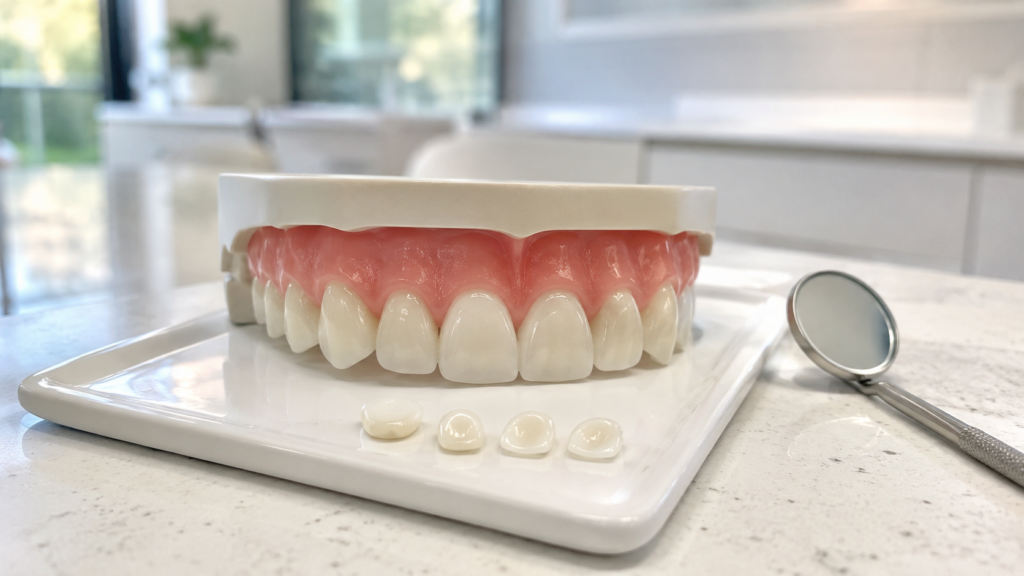
Veneers are designed to change the visible appearance of selected teeth, so the condition and appearance of the surrounding gums can be relevant during planning.
Your dentist may look at how the gum tissue relates to the teeth being considered for veneers, along with the condition of the underlying teeth, existing restorations, and your cosmetic goals.
A consultation is also important because veneers are not automatically the right choice for every cosmetic concern.
One patient may have healthy teeth and gums that support a straightforward cosmetic plan. Another person with similar appearance goals may have an oral health or restorative concern that changes the recommendation.
The evaluation helps determine what makes sense for your particular smile rather than beginning with the assumption that one procedure is the answer.
What About Dental Crowns?
Crowns can sometimes improve the appearance of a tooth, but they also serve an important restorative purpose.
If a crown is being considered, your dentist needs to evaluate the tooth itself as well as the surrounding tissues. Structural damage, an existing restoration, or another dental condition may be just as important to the recommendation as the way the tooth looks.
This is one reason cosmetic and restorative care can sometimes overlap.
You may come to an appointment because you want a tooth to look different, while the evaluation reveals that the tooth also has restorative needs. In that situation, the treatment discussion should consider both appearance and function rather than treating them as unrelated concerns.
Does a Gum Problem Always Mean Cosmetic Treatment Has to Wait?
No.
The presence of a gum concern does not automatically rule out cosmetic dentistry or mean every patient needs the same treatment first.
The significance of the finding depends on factors such as:
- What the dentist sees during the examination
- Which teeth and gums are involved
- The cosmetic treatment being considered
- Whether another dental concern is present
- Your overall oral health
- Your individual goals
This distinction matters because broad statements such as “your gums must be perfect before cosmetic treatment” can oversimplify treatment planning.
Your dentist needs to evaluate your actual situation and explain whether a finding affects the proposed procedure, the timing of treatment, or neither.
Why Does Individualized Planning Matter?
Two patients can want similar cosmetic changes and still have very different treatment plans.
One person may be primarily concerned about tooth shape or color. Another may have existing crowns or fillings. Someone else may have gum inflammation or a structural issue that needs to be considered before deciding what cosmetic option makes sense.
Your bite, oral health history, existing dental work, and personal priorities can also influence the conversation.
That is why treatment planning should start with the patient rather than a predetermined procedure.
When more than one option is reasonable, we can explain the differences, answer your questions, and help you understand why one approach may fit your circumstances better than another.
What Questions Should You Ask Before Cosmetic Dentistry?
A cosmetic consultation should be a conversation.
Consider asking:
- How do my gums look right now?
- Is there anything that should be addressed before cosmetic treatment?
- Does my current oral health affect my options?
- Why are you recommending this treatment sequence?
- Are there alternatives I should consider?
- What should I expect before treatment begins?
You should understand not only what is being recommended but also why it makes sense for your smile.
Gum Health Is Part of the Bigger Cosmetic Picture
Cosmetic dentistry is not just about the visible surface of your teeth.
Your gums, tooth structure, existing dental work, and overall oral health can all influence treatment planning. Evaluating those factors helps your dentist understand whether a cosmetic procedure is appropriate now, whether another concern deserves attention first, or whether more than one treatment approach could work.
That does not mean everyone needs the same preparation before cosmetic care.
At Liesen Family Dental, we focus on honest recommendations, clear explanations, and treatment plans built around the individual patient. If you are considering veneers, crowns, or another cosmetic option, we can evaluate your current oral health and discuss what may make sense for your goals.
Contact us to schedule a consultation and start the conversation.